



Advertisement

Advertisement
Quick Summary
Best For
Families and commuters who want a roomy compact SUV with strong warranty coverage, good fuel economy, and a comfortable feature-rich cabin.
$28,705
MSRP (Base)
$31,200
Market Average Price
$28,705
MSRP (Base)
$31,200
Market Average Price
Key Specs
Engine / Powertrain
2.5L I4, FWD or AWD
Horsepower
187 hp
MPG / Range
25 / 32 mpg
Seating
5 seats
Cargo Capacity
Up to 80.3 cu ft
Basic Warranty
5 years / 60,000 miles
Pros
Excellent warranty coverage for the class
Spacious interior and generous cargo room
Good standard tech and safety equipment
Comfortable ride quality for daily commuting
Cons
Base engine feels adequate rather than quick
Some rivals offer sharper steering and handling
Upper trims can get pricey compared with value-focused competitors
Full Review
Exterior Design
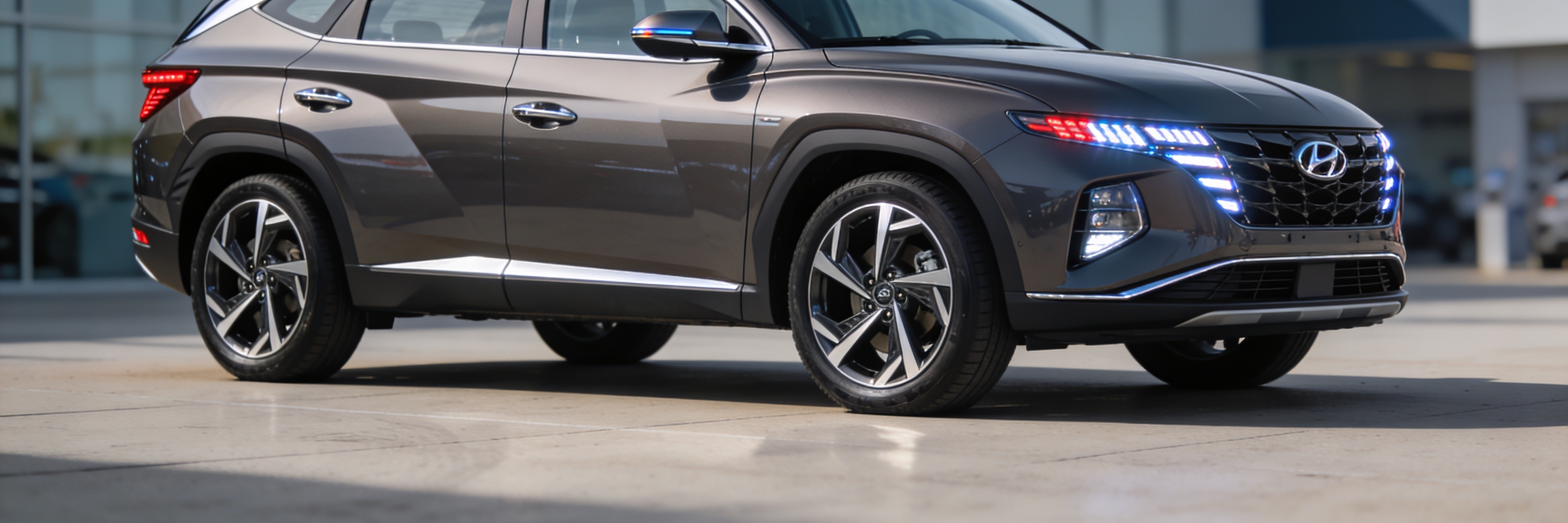
The 2025 Hyundai Tucson stands out with crisp surfacing, a wide grille treatment, and a modern SUV stance that looks more upscale than many compact rivals. Its proportions are practical rather than sporty, but the design still feels contemporary and distinctive in traffic. Buyers who want an SUV that looks clean, substantial, and family-friendly without being too aggressive should find the Tucson easy to like.
Interior & Comfort
Inside, the Tucson focuses on comfort, visibility, and straightforward usability. The front seats are supportive enough for commuting and weekend road trips, while rear-seat space is a real strength for a compact SUV. Materials are solid for the segment, and higher trims add a more polished look with larger screens and extra convenience features. The cargo area is one of the more useful in the class, making the Tucson a practical choice for families, strollers, grocery runs, and travel gear.
Performance & Engine
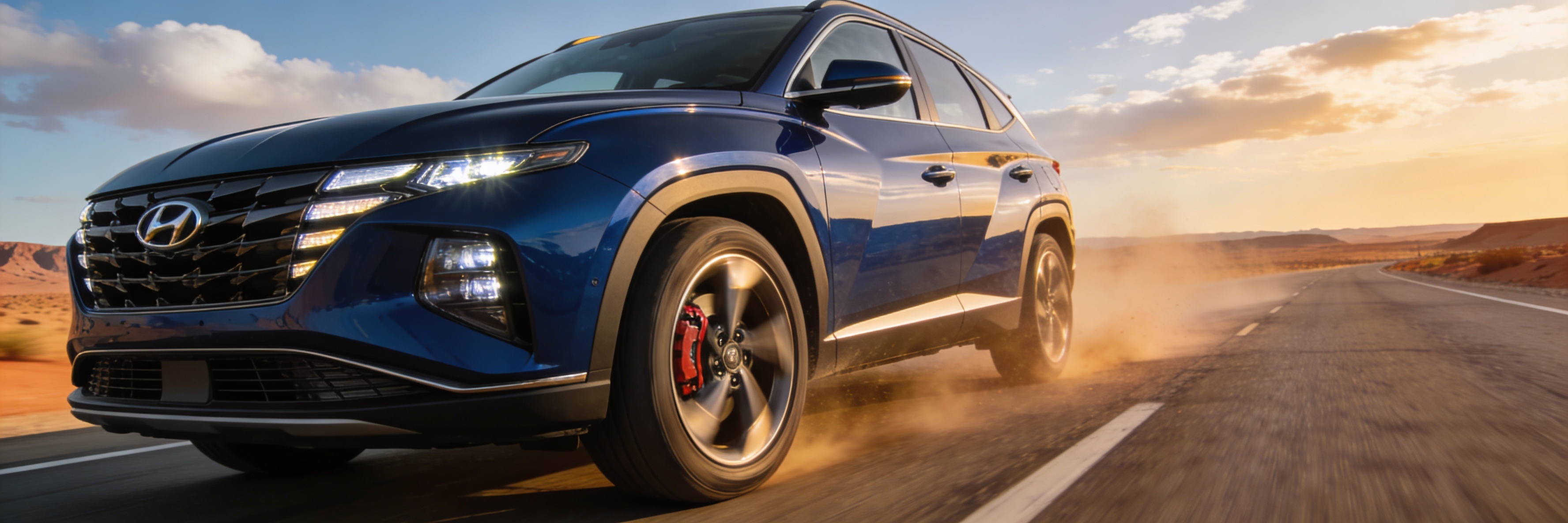
Most Tucson trims use a 2.5-liter four-cylinder engine making 187 horsepower, paired with an eight-speed automatic transmission. That setup delivers smooth, predictable power for everyday driving, though it is not especially quick when fully loaded or merging hard onto faster highways. Fuel economy remains competitive for a gas-only compact SUV, especially in front-wheel-drive form. Available all-wheel drive adds confidence in rain and light snow, making the Tucson a versatile year-round family vehicle in many parts of the USA.
Technology & Features
Hyundai gives the Tucson a strong technology story, especially considering its price point. Depending on trim, buyers can get a large infotainment display, digital instrumentation, wireless connectivity, multiple USB ports, and a broad list of driver-assistance features. Standard safety equipment is a major selling point, and the interface is generally intuitive once drivers spend a little time with it. For shoppers comparing value, the Tucson often feels better equipped than similarly priced competitors.
Driving Experience
Behind the wheel, the Tucson emphasizes comfort over excitement. The suspension tuning helps smooth out broken pavement, and cabin isolation is good enough for relaxed commuting. Steering is light and easy for city driving and parking, though it does not provide much enthusiast feedback. That said, many buyers in this class want a quiet, calm, dependable crossover rather than something sporty, and in that role the Tucson performs very well.
Top 3 Alternatives to the Hyundai Tucson
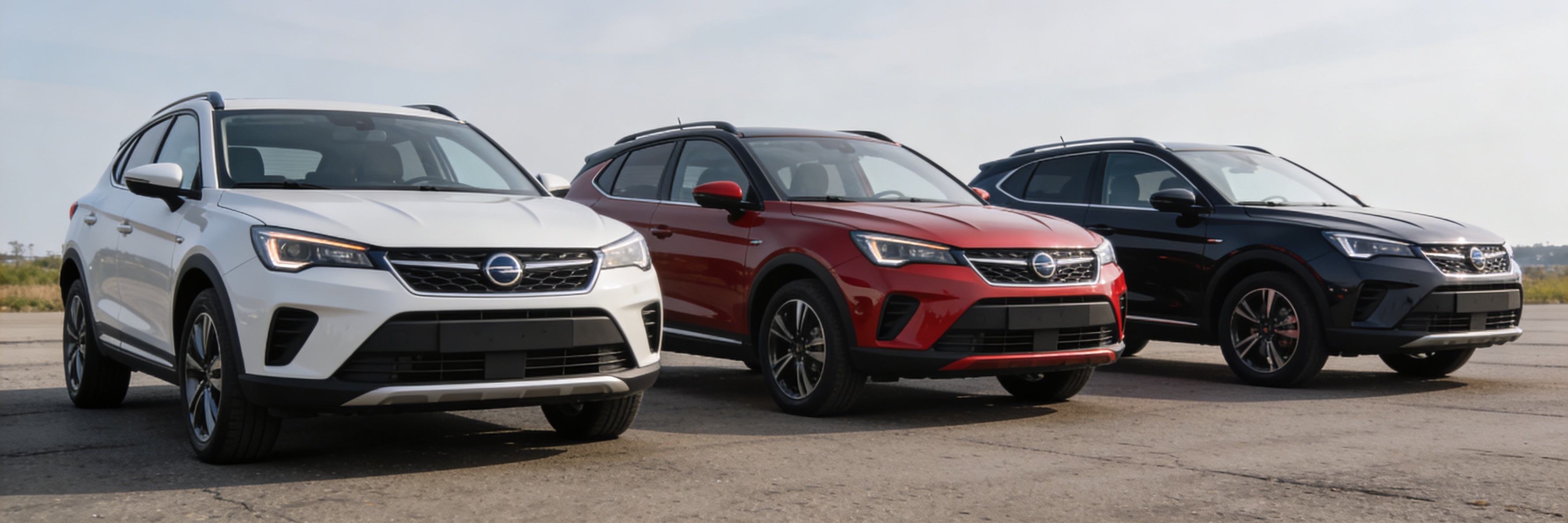
| Feature | Honda CR-V | Toyota RAV4 | Kia Sportage |
|---|---|---|---|
| Horsepower | 190 hp | 203 hp | 187 hp |
| MPG City | 28 | 27 | 25 |
| MPG Highway | 34 | 35 | 32 |
| Starting Price | $30,100 | $29,250 | $27,390 |
| Financing APR | 4.9% APR | 5.2% APR | 4.7% APR |
| Why it stands out | Excellent resale value and roomy cabin | Strong reliability reputation and available hybrid lineup | Sharp value, long warranty, and upscale interior feel |
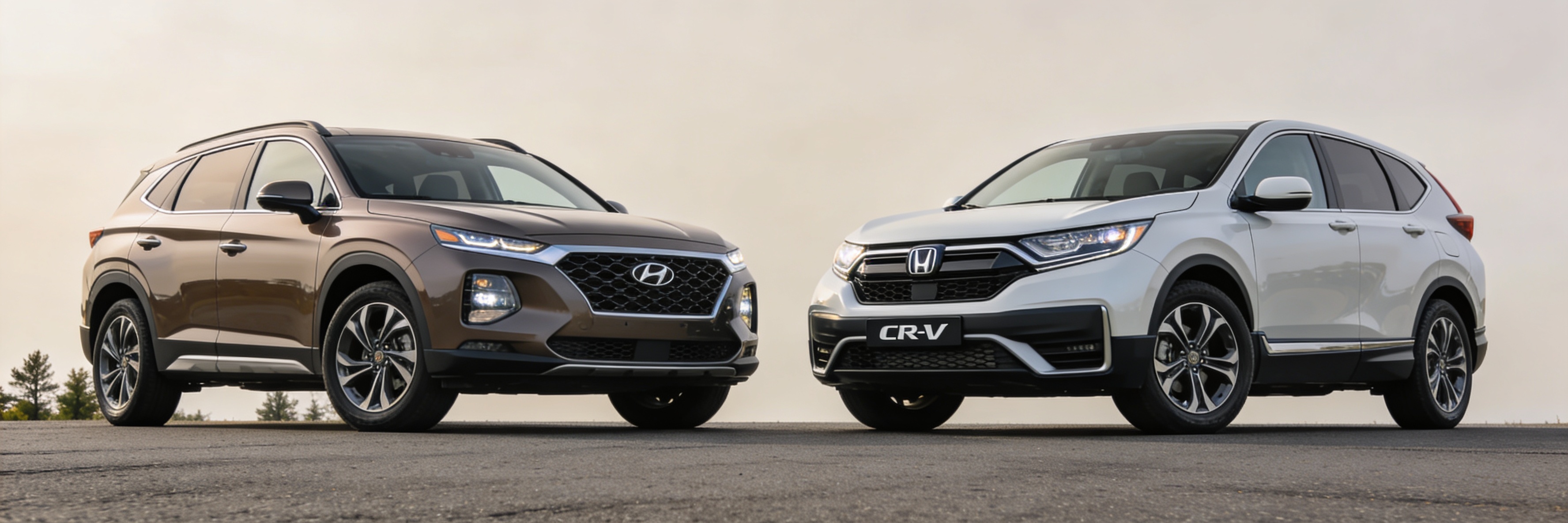
Hyundai Tucson vs Honda CR-V
| Hyundai Tucson | Honda CR-V |
|---|---|
| Price | |
| Starts around $28,705 | Starts around $30,100 |
| Engine / HP | |
| 2.5L I4 / 187 hp | 1.5L turbo I4 / 190 hp |
| MPG / Range | |
| 25 city / 32 highway | 28 city / 34 highway |
| Tech & Safety | |
| Strong standard safety suite and available larger screens | Excellent safety tech and polished infotainment integration |
| Cargo / Seating | |
| 5 seats, very generous cargo room | 5 seats, roomy cabin and competitive cargo area |
| Warranty | |
| 5 years / 60,000 miles basic | 3 years / 36,000 miles basic |
Conclusion
Choose the Hyundai Tucson if you want lower entry pricing, better warranty coverage, and strong overall value. The Honda CR-V is the better pick for buyers who prioritize a slightly more refined powertrain and stronger fuel economy, but the Tucson remains the smarter budget-conscious family SUV for many USA shoppers.
Cost of Ownership Estimate
Fuel / Energy cost
$150–$195 / month
Insurance cost
$145–$205 / month
Loan payment
$470–$610 / month
Maintenance
$30–$55 / month
Buying Advice
The Hyundai Tucson makes the most sense if you want a balanced compact SUV and plan to keep it long enough to benefit from Hyundai’s class-leading warranty coverage. Compare trims carefully, because the value equation is strongest in lower and mid-level models where the feature content is high and the payment stays reasonable. Before signing, shoppers in the USA should compare dealer incentives, loan APR offers, and insurance quotes together, since the best total deal is often determined as much by financing and insurance costs as by the sticker price itself.
Frequently Asked Questions
Is the 2025 Hyundai Tucson a good family SUV?
Yes. It offers a roomy cabin, solid safety features, easy child-seat accommodation, and generous cargo space, all of which make it a strong family-friendly compact SUV.
How expensive is it to insure a Hyundai Tucson in the USA?
Insurance costs vary by driver profile, ZIP code, trim level, and coverage, but many owners can expect roughly $145 to $205 per month. Comparing multiple insurers is the best way to find a cheaper rate.
Is the Hyundai Tucson better than the Honda CR-V?
The Tucson is better for warranty coverage and value, while the CR-V has slight advantages in powertrain refinement and efficiency. Your best choice depends on whether you prioritize lower cost or a more polished driving feel.
Final Verdict
The 2025 Hyundai Tucson is one of the smartest compact SUV buys for shoppers who value comfort, practicality, and ownership peace of mind. It may not be the sportiest option in the segment, but it delivers a lot of what most real-world buyers actually want: space, safety, respectable fuel economy, modern tech, and standout warranty coverage. If you can secure a competitive APR and low insurance premium, the Tucson becomes an even stronger value proposition.
Looking for Better Deals?
Compare lender and insurer offers before you buy so your Hyundai Tucson costs less to own each month.
Compare cheap car insurance quotes from multiple providers
Check auto loan rates and monthly payment offers
Review combined financing and insurance savings before purchase


Advertisement


